



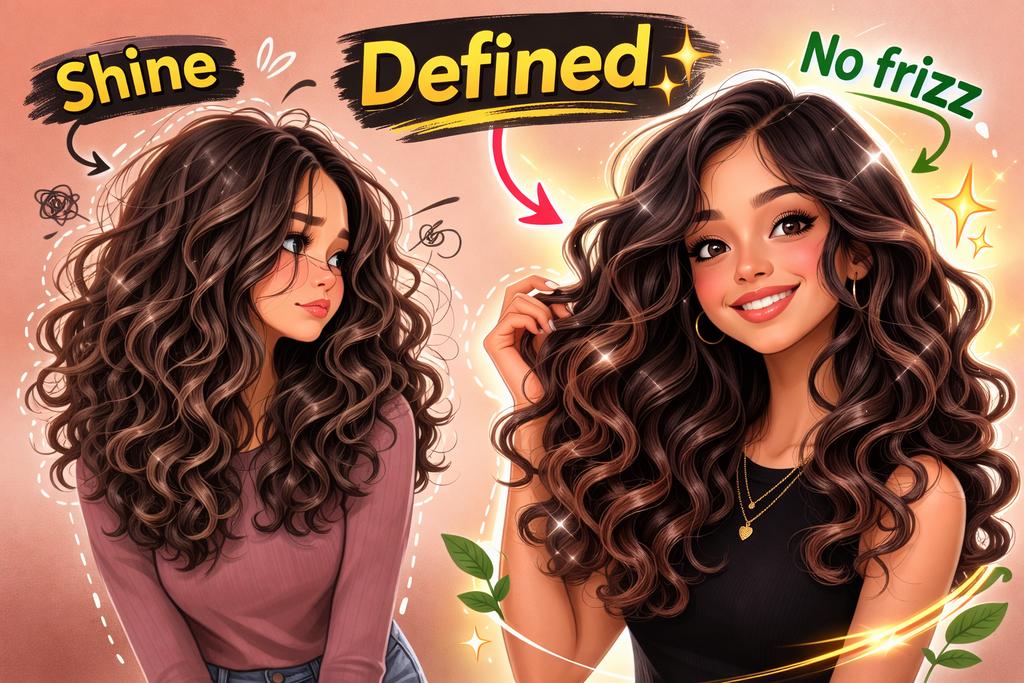
The Holy Grail Haircare Routine for Wavy Hair Girlies
Wavy hair is one of the most misunderstood hair types. Many people struggle with frizzy waves, undefined texture, and flat ends simply because they don’t follow the right haircare routine for wavy hair
It’s not fully straight, not fully curly — it sits beautifully in the middle. But because of that, it often gets treated like the wrong category… and that’s where the frizz begins.
Most wavy hair isn’t damaged. It’s just confused — overwhelmed with heavy oils, brushed like straight hair, or styled like curls.
A good routine gives wavy hair two things:
structure + softness
Let’s break it down simply-
How to Know If You Have Wavy Hair (Even If You Think You Don’t)
Many people don’t realise they have wavy hair because it doesn’t look “defined” all the time.
You likely have waves if you notice:
-
S-shaped bends when your hair is wet
Even if it dries frizzy, the wave pattern is there. -
Frizz without full curls
Your hair isn’t straight — it just lacks wave support. -
Volume at the crown but limp ends
Waves often start from mid-length, leaving roots puffy and ends flat. -
Your hair looks better with scrunching than brushing
That’s a key wavy sign.
Wavy hair is highly sensitive to humidity and friction because the hair shaft is slightly curved, making it more prone to uneven moisture absorption.
What Wavy Hair Really Needs (Moisture, Structure & Frizz Control)
Wavy hair thrives on balance — not extremes.
Explore wavy & curly hair routine by moha
1. Balanced Moisture (Not Heavy Grease)
Waves need hydration, but too much oil or heavy conditioning weighs them down.
The goal is:
- soft strands
- defined waves
- no buildup
2. Lightweight Conditioning
Wavy hair usually has:
- an oilier scalp
- drier mid-lengths
- frizz-prone ends
So conditioning is essential — just applied correctly.
3. Minimal Disruption
The more you disturb waves, the more they frizz. Rough towel drying, dry brushing, and
constant touching break the natural pattern.
Cuticle Behaviour in Wavy Hair
This is where wavy hair becomes unique. Wavy strands have a slightly raised cuticle compared to straight hair.
This means:
- moisture enters unevenly
- humidity causes swelling
- hair becomes frizzy faster
- shine reduces
So wavy hair needs routines that smooth the cuticle gently, not strip it aggressively.
Best Haircare Routine for Wavy Hair (Step-by-Step Guide)
You don’t need a 10-step curly routine. Wavy hair does best with consistency and light structure.
Step 1: Wash – Gentle Herbal Shampoo (2–3x/week)
Choose a mild sulphate-free cleanser wavy hair cleanser that removes sweat and pollution without drying. Wavy scalps often get oily faster, so regular cleansing matters.
Over washing strips the scalp barrier, but under washing leads to buildup — both worsen frizz.
Step 2: Condition – Light but Consistent
Never skip the conditioner. Choose a lightweight conditioner that doesn’t flatten hair
Apply only on:
- mid-length
- ends
This helps waves clump together instead of puffing out.
Step 3: Style – Leave-in or Serum on Damp Hair
If you're wondering how to define natural wavy hair, styling while the hair is damp is the most effective method.
Use a small amount of leave-in conditioner / lightweight serum / anti-frizz cream (minimal). Then gently scrunch upwards. Applying the product on dry hair increases friction and breaks wave formation.
Step 4: Dry – Scrunch, Don’t Rub
One rule: never rub wavy hair with a towel.
Instead:
- use a soft cotton t-shirt or microfiber towel
- scrunch gently
- air dry or diffuse on low heat
This preserves the wave pattern.
Common Mistakes That Make Wavy Hair Frizzy
These are the most common reasons waves turn into frizz:
1. Brushing Dry Hair
Dry brushing separates wave clumps, creating puffiness. Brush only before washing or when hair is wet with conditioner.
2. Over-Oiling
Heavy oiling flattens waves and causes buildup. Wavy hair needs oil as a pre-wash ritual, not a daily styling step.
3. Skipping Conditioner
This is the fastest way to get:
- rough texture
- tangles
- undefined waves
Conditioning is not optional for wavy hair health.
4. Using Curl Products That Are Too Heavy
Wavy hair is not curly hair.
Heavy creams can make waves look greasy and limp.
Wavy hair is naturally beautiful — it just needs the right balance. When you treat waves gently, support the cuticle, and reduce disruption.
Your hair doesn’t fight you anymore. It flows.
FAQ-
Should wavy hair be brushed?
Wavy hair should ideally not be brushed when dry, as this separates the wave pattern and causes frizz. Instead, detangle when the hair is wet with conditioner.
How often should wavy hair be washed?
Most people with wavy hair benefit from washing 2–3 times a week using a gentle shampoo for wavy hair, depending on scalp oil levels.
Should wavy hair oil regularly?
Yes, but lightly. Wavy hair benefits most from twice-thrice a week pre-wash oiling, not heavy daily oiling, as too much oil can weigh waves down and cause scalp buildup.
What causes frizz in wavy hair?
Frizz in wavy hair is usually caused by humidity, dryness, rough towel drying, or using heavy styling products.